1)
Literature-based mechanome
We present a comprehensive mapping of the mechanome, which prioritizes genes implicated in mechanobiology that we curated from the literature using a systematic approach to assign a ‘Mechanobiology Priority Score’ (MPS) to all ~20,000 protein-coding genes of the human genome.
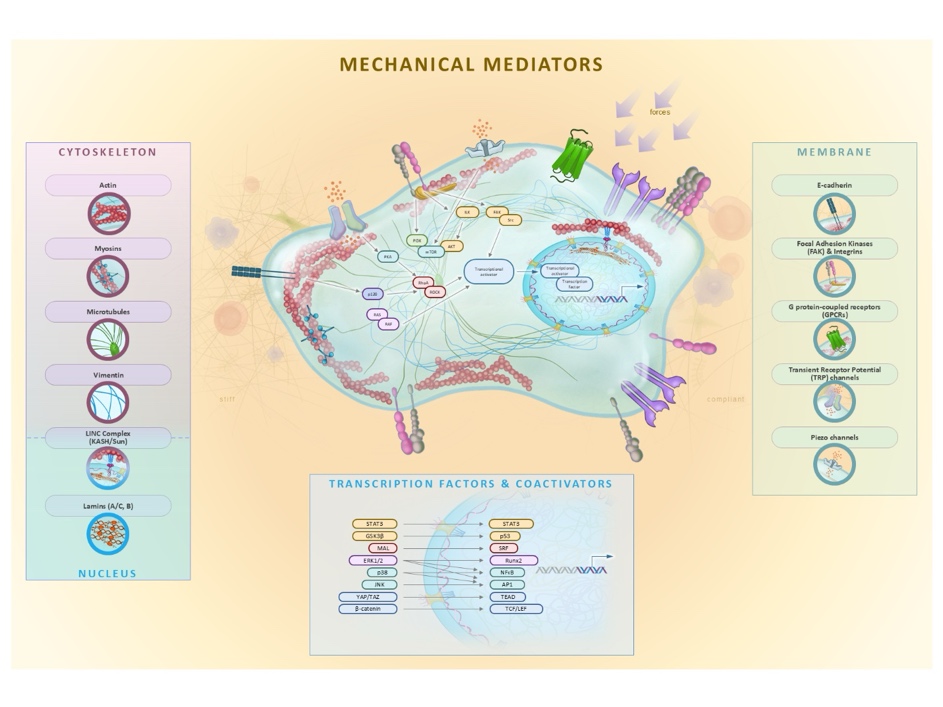
For high-scoring MPS genes, we conducted an extensive literature review, scanning peer-reviewed papers for each gene to identify consensus mechanical mediators that directly engage with mechanical forces and have important structural and load-bearing roles in cells and tissues.
2)
Data-driven genes of cellular responses to mechanical stimuli
The dynamic response of cells to mechanical stimuli is another crucial dimension of the mechanome. To identify shared mediators of mechanical response, we conducted a data-driven meta-analysis of publicly available transcriptomic datasets to identify predicted mechanical mediators that regulate cellular responses to mechanical stimuli. This approach enables discovery of trends across datasets, including shared genes that are differentially expressed in response to multiple mechanical stimuli and could represent novel conserved mechanical mediators.